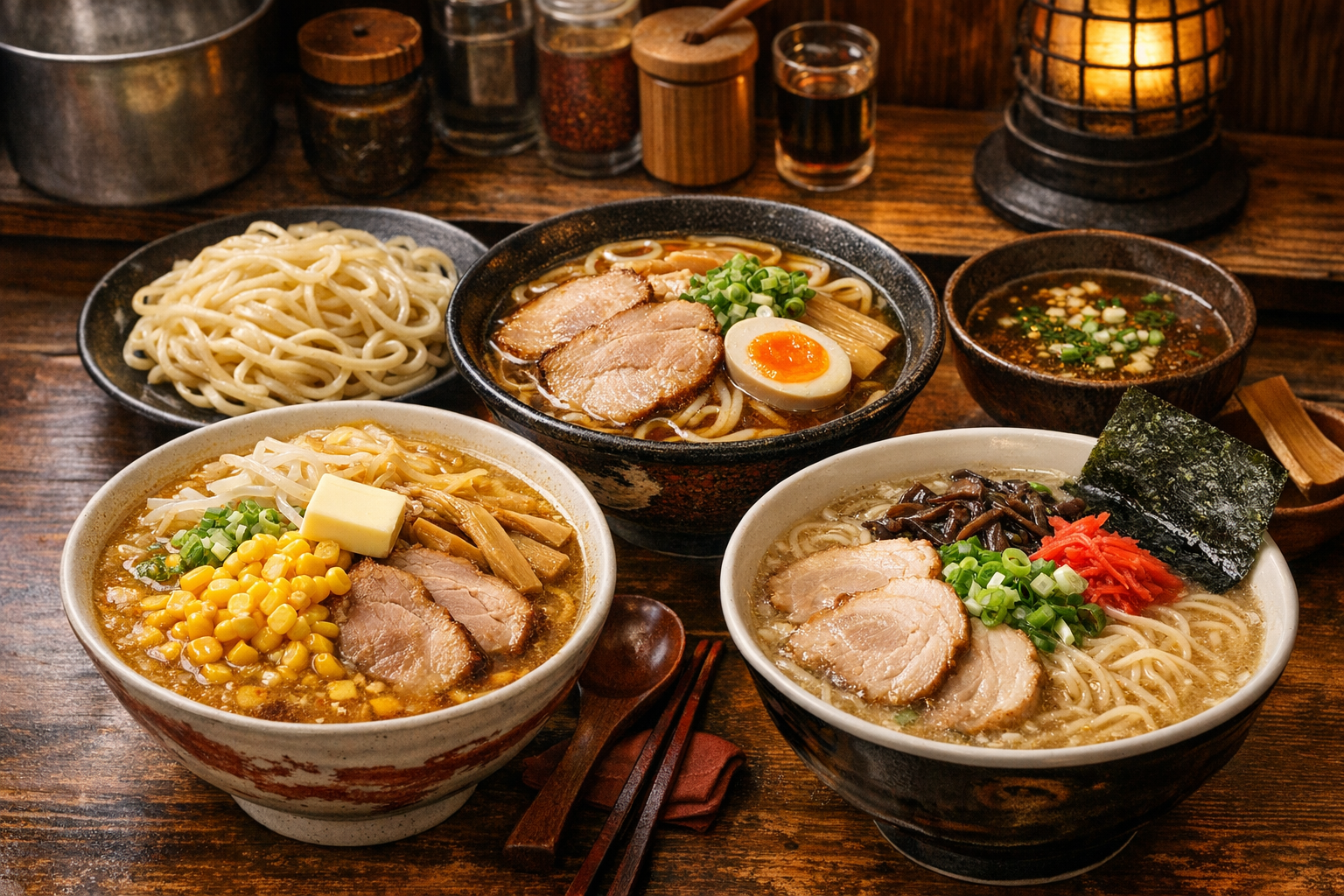
Best Ramen in Japan: Regional Styles & Must-Visit Shops
Ramen in Japan is not fast food. It is not a single dish. It is not something you grab without thinking.
Ramen is craft, culture and obsession, served in a bowl.
Across Japan, ramen changes from city to city and sometimes street to street. Broths simmer for hours or even days. Noodle thickness, texture and curl are debated with the seriousness of wine tasting. Locals argue passionately about toppings, salt levels and oil ratios. Some shops serve only one bowl, perfected over decades
.If you want to eat well in Japan, understanding ramen is essential.
This guide takes you deep into Japan’s regional ramen styles, highlights must‑visit shops across the country, explains how to order like a local, and shows you how to plan a ramen‑focused trip without missing the best bowls.
Whether this is your first visit or your fifth, this is your complete ramen guide to Japan.
Why ramen is so regional in Japan
Japan’s ramen culture developed locally, shaped by geography, climate, ingredients and working life.
In colder northern regions, broths became richer and heavier to provide warmth and energy. In dense cities, ramen evolved into a fast, affordable meal for workers. In port towns, seafood broths dominated. Inland, soy and chicken took centre stage.
Unlike sushi or tempura, ramen has no single “authentic” version. Every region believes theirs is the best, and many are right.
Travelling through Japan with ramen in mind transforms your trip. The food becomes part of the route, not just something you eat between sights. To do that properly, you need navigation, translation, reviews and opening hours at your fingertips, especially when you are hunting down small local shops that do not advertise in English.
Get connected in Japan with a Vodafone travel eSIM. Explore coverage, setup and data options on the Japan destination page:
Tokyo ramen: The capital of endless choice
Tokyo has more ramen shops than anywhere else in the world. Estimates run into the thousands. From Michelin‑listed counters to hole‑in‑the‑wall legends, Tokyo is where ramen tradition meets constant innovation.
For first‑time visitors, Tokyo ramen is the perfect introduction because styles vary widely and many shops cater to non‑Japanese speakers.
Tokyo’s main ramen styles
Shoyu ramen
Soy sauce based broth, clear but deeply savoury. Balanced, versatile and classic. This is what many people imagine when they think of ramen.
Shio ramen
Salt based broth, lighter and cleaner, often chicken or seafood forward. Ideal if you prefer subtle flavours.
Tonkotsu ramen
Pork bone broth, creamy and rich. While associated with Fukuoka, Tokyo versions are refined and varied.
Tsukemen
Dipping noodles served separately from an intense broth. Popular in Tokyo and extremely filling.
Must‑visit ramen areas in Tokyo
Tokyo Ramen Street (Tokyo Station)
Eight famous ramen shops in one underground corridor. Ideal if time is limited and you want to sample recognised names.
Shinjuku
Late‑night ramen heaven with everything from heavy tonkotsu to seafood broths. Perfect after drinks.
Ikebukuro
Birthplace of modern tsukemen culture and home to cult favourites.
Iconic Tokyo ramen shops
Afuri (Harajuku, Ebisu)
Known for yuzu‑infused shio ramen. Light, fragrant and approachable, especially good in warmer months.
Menya Itto (Shinjuku)
Often ranked among Tokyo’s best for tsukemen. Expect rich chicken broth and perfectly cooked noodles.
Ramen Jiro (multiple locations)
Massive portions, thick noodles, heavy garlic. Not for everyone, but an unforgettable experience if you like bold flavours.
Tokyo teaches you that ramen has no limits.
Hakata ramen in Fukuoka: The tonkotsu heartland
If ramen has a spiritual home, many would argue it is Fukuoka. Hakata ramen, from the city’s Hakata district, is one of Japan’s most famous styles and has been exported worldwide. At home, it remains fast, affordable and deeply local.
What defines Hakata ramen
Creamy white tonkotsu broth made from pork bones
Very thin straight noodles
Quick cooking time
Customisable noodle firmness
Hakata ramen was designed for workers who wanted a fast, filling meal. That tradition continues today.
Noodle firmness and kaedama
In Hakata, you choose how firm your noodles are. Options range from soft to extra firm. Many locals order firm noodles and then add kaedama, an extra serving of noodles added to the remaining broth.
Famous Hakata ramen shops
Ichiran
Globally famous, but still worth visiting in Japan. Solo dining booths, custom order sheets and consistent quality.
Ippudo (original branches)
Refined tonkotsu with balance and elegance. A great introduction to the style.
Hakata Issou
Loved by locals for its intensely pork‑forward broth. Strong aroma, big flavour.
Eating ramen in Fukuoka feels different. Faster, louder, more everyday. It is ramen as daily fuel.
Sapporo ramen: Miso, butter and cold‑weather comfort
Sapporo, capital of Hokkaido, gave Japan miso ramen.
Created to combat freezing winters, this style is rich, warming and deeply satisfying. It is one of the most distinctive regional bowls in the country.
Characteristics of Sapporo miso ramen
Thick miso‑based broth
Curly, chunky noodles
Hearty toppings like corn, butter, cabbage and minced pork
High fat content to retain heat
This is ramen designed to warm your entire body.
Legendary Sapporo ramen shops
Ramen Shingen
A local favourite with different miso blends to choose from.
Sumire
One of the original shops that defined modern miso ramen. Strong, salty and unforgettable.
Aji no Sanpei
Historically important as one of the earliest miso ramen pioneers.
In winter, standing outside a steaming bowl of miso ramen while snow falls around you is one of Japan’s great food moments.
Kyoto ramen: Dark, rich and quietly distinctive
Kyoto is better known for kaiseki and traditional cuisine, but its ramen scene is underrated and unique.
Kyoto ramen often features dark soy‑based broths with pork or chicken, delivering deep flavour without excessive richness.
Kyoto ramen characteristics
Dark shoyu broth
Strong umami
Moderate oil
Straight noodles
Kyoto ramen feels old‑school and comforting, perfect after a long day of temple visits.
Kyoto ramen shops to visit
Honke Daiichi Asahi
A Kyoto institution, open early and late, popular with taxi drivers and locals.
Masutani
Classic Kyoto style with chicken broth and simple toppings.
Ramen Sen no Kaze
More visitor‑friendly, offering customisation and English menus.
Kyoto ramen may not chase trends, but it delivers consistency and depth.
Onomichi ramen: Small‑town perfection
Onomichi, a quiet port town between Osaka and Hiroshima, produces one of Japan’s most charming ramen styles.
What makes Onomichi ramen special
Clear soy‑based chicken broth
Floating pork back fat
Flat noodles
Simple toppings
The result is light yet savoury, perfect for repeat bowls.
Where to eat in Onomichi
Onomichi Ramen Maruboshi
Often cited as the town’s best, with long queues and big rewards.
Onomichi ramen proves that some of Japan’s best food lives far from major cities.
Kitakata ramen: A breakfast tradition
Kitakata, in Fukushima Prefecture, has one of the highest numbers of ramen shops per capita in Japan.
Here, ramen is eaten for breakfast.
Kitakata ramen style
Clear pork and niboshi (dried sardine) broth
Thick, flat, wavy noodles
Mild, balanced flavour
Notable Kitakata shops
Bannai Shokudo
The most famous name in Kitakata ramen, with branches nationwide.
Eating ramen at 9 am feels strange until you try it. Then it feels inevitable.
Yokohama Iekei ramen: Power and intensity
Iekei ramen originated in Yokohama and is known for its powerful flavour.
Iekei characteristics
Thick tonkotsu and soy broth
Straight noodles
Spinach, seaweed and pork slices
Strong saltiness
This is not subtle ramen. It is bold and filling.
Famous Iekei shops
Yoshimuraya
The original and still the benchmark.
Iekei ramen is a must for lovers of strong, unapologetic flavours.
Regional ramen styles worth seeking out
Beyond the famous names, Japan is full of local styles worth travelling for.
Wakayama ramen
Soy and pork broth, slightly sweet, comforting and rich.
Nagoya Taiwan ramen
Spicy minced pork, garlic and chilli. Not from Taiwan, despite the name.
Kumamoto ramen
Tonkotsu with burnt garlic oil and thicker noodles.
Hakodate shio ramen
Light, clear salt broth with seafood notes.
Each region tells its own story through ramen.
How to order ramen in Japan confidently
For many visitors, ordering ramen feels intimidating. It does not need to be.
The ticket machine system
Most ramen shops use vending machines near the entrance.
Insert cash
Select your ramen
Collect ticket
Hand ticket to staff
Buttons often have photos. If unsure, look for the most popular option.
Useful Japanese words
おすすめ (osusume) = recommended
並 (nami) = regular size
大盛 (oomori) = large portion
硬め (katame) = firm noodles
Ramen etiquette
Slurping is polite
Eat efficiently
Do not linger after finishing
Water is usually self‑service
Knowing these basics removes stress and lets you focus on flavour.
Planning a ramen‑focused Japan itinerary
Ramen pairs naturally with rail travel. Many great ramen towns sit along major train lines.
Suggested ramen route
Tokyo: variety and innovation
Yokohama: Iekei power bowls
Kyoto and Osaka: classic Kansai styles
Onomichi: small‑town charm
Fukuoka: tonkotsu mastery
Sapporo: miso comfort
Mobile data helps enormously for checking opening hours, navigating backstreets and finding small shops that do not appear in guidebooks.
Why staying connected matters for food travel in Japan
Many of Japan’s best ramen shops:
Do not take reservations
Have irregular opening hours
Close early when soup runs out
Are hidden in residential areas
Reliable mobile data lets you:
Check queues in real time
Translate handwritten menus
Navigate quiet neighbourhoods
Find alternatives if a shop is closed
For food‑led travel, connectivity is not optional, it is essential.
Final tips for finding unforgettable ramen
Trust small shops with short menus
Follow local queues
Avoid peak lunch times if possible
Try regional styles, not just famous names
Eat more than one bowl per day if you can
Ramen is affordable, fast and endlessly varied. Some of the best bowls in Japan cost less than a takeaway coffee at home.
Ready to eat your way across Japan?
From creamy tonkotsu in Fukuoka to miso‑rich bowls in Sapporo, ramen is one of the most rewarding ways to experience Japan. Plan your route, follow your appetite, and make sure you are connected from the moment you arrive.
Stay connected across cities, towns and rural areas with Vodafone:
Related Articles

Japan Travel Guide 2026: The Ultimate Resource for UK Visitors
Planning a trip to Japan in 2026? This ultimate UK-friendly guide covers when to go, where to visit, transport, culture and staying connected.

Most Visited Holiday Destinations 2025: The Statistics and Trends You Need to Know
See which holiday destinations topped the charts in 2025, with travel statistics, emerging trends and insights into what drove global tourism demand.
Japan eSIM Guide 2026: Stay Connected from Tokyo to Kyoto
Stay connected across Tokyo, Kyoto and beyond with this Japan eSIM guide for 2026. Learn about coverage, setup tips and the best data options for your trip.