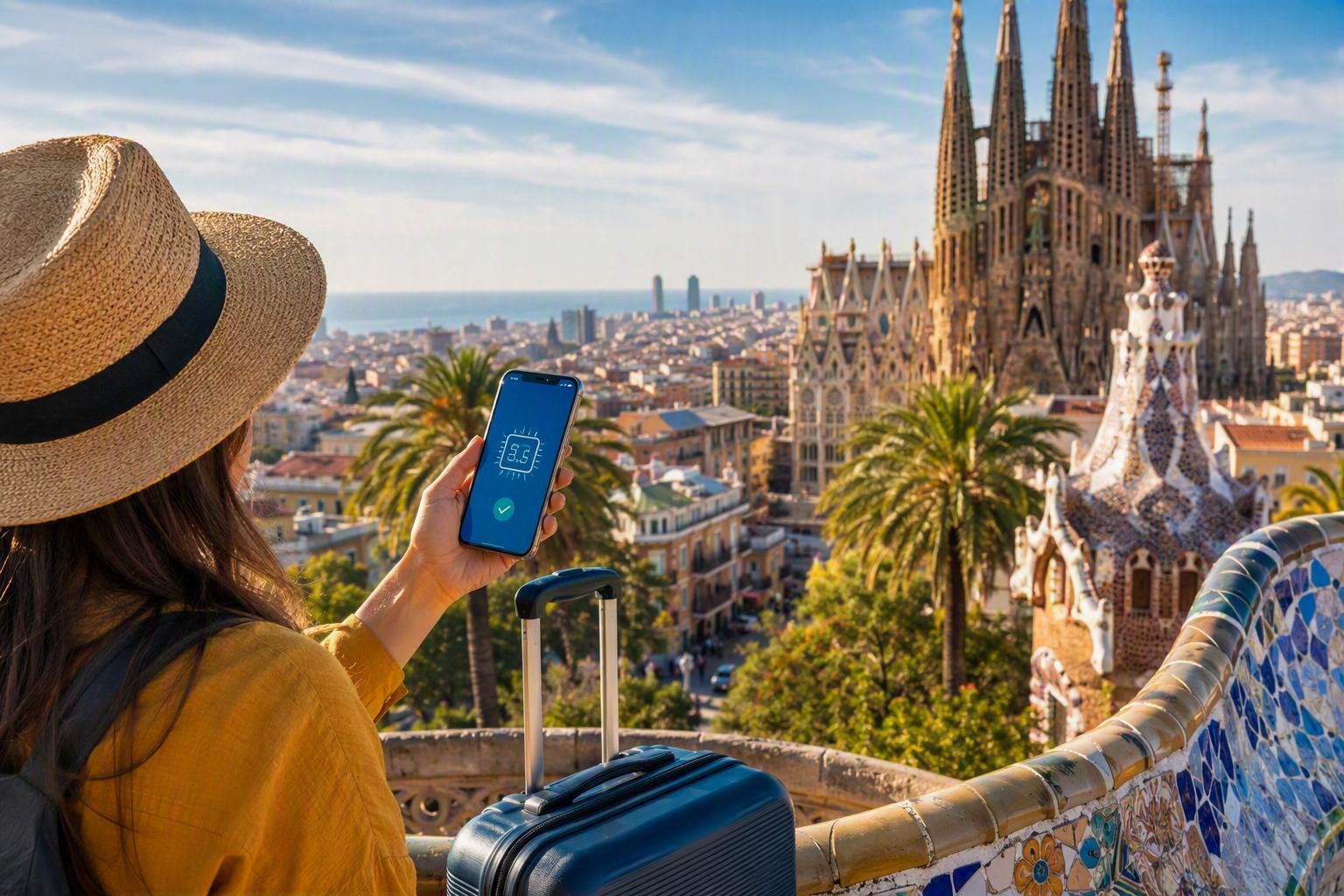
Can I Buy an eSIM for Spain? Yes! Here's How to Choose and Set It Up Before You Fly
Planning a trip to Spain?
Whether you're heading to Barcelona for a city break, relaxing on the Costa del Sol, exploring Madrid's museums or island hopping around the Balearics, one thing you'll almost certainly need is reliable mobile data.
Many travellers ask the same question before departure: Can I buy an eSIM for Spain before I travel?
The simple answer is yes.
In fact, buying and installing your Spain eSIM before you leave the country is usually the easiest way to stay connected the moment you land.
Instead of searching for a SIM card shop at the airport, queueing at mobile kiosks or relying on public Wi-Fi, you can have everything ready before departure. Your phone can connect as soon as you arrive, making it easier to navigate, book transport, contact accommodation and start enjoying your holiday.
This guide explains exactly how to buy an eSIM for Spain, how to choose the right plan, when to install it, when to activate it, common mistakes to avoid and how to make sure you're connected from the moment your plane touches down.
What Is an eSIM?
An eSIM is a digital SIM card built directly into your smartphone.
Unlike a traditional plastic SIM card, an eSIM is downloaded electronically and activated through your device settings.
This means you don't need to:
Visit a mobile phone shop
Remove your existing SIM card
Carry multiple SIMs
Wait until arrival to get connected
Modern smartphones can support multiple SIM profiles, allowing travellers to keep their usual number while using travel data abroad.
Why Buy an eSIM for Spain Before You Travel?
Many travellers still wait until they arrive in Spain before considering connectivity.
While airport SIM cards remain available in many locations, buying in advance has several advantages.
Arrive Connected
Imagine landing in Barcelona.
You need directions to your hotel, confirmation of your airport transfer, access to digital tickets and perhaps a quick message home to let family know you've arrived safely.
Without data, these simple tasks can quickly become frustrating.
With an eSIM already installed, you're ready to go almost immediately.
Avoid Airport Queues
Spanish airports can be busy throughout the year, especially during:
Summer holidays
Easter breaks
Half-term travel periods
Christmas and New Year
Major sporting events
An eSIM removes the need to visit a SIM card kiosk after arrival.
Better Trip Planning
Preparing connectivity before departure means one less thing to worry about once you're abroad.
Everything can be tested and configured while you're still at home.
Keep Your Existing Number
Many travellers worry about losing access to their normal number.
With most modern dual-SIM devices, you can continue using your regular number while assigning mobile data to a travel eSIM.
Stay Connected Across Spain
From Barcelona and Valencia to Seville, Malaga and Mallorca, reliable mobile data helps you navigate, book activities, access maps and communicate throughout your trip.Check out the Best eSIM for Spain 2026 guide for destination-specific connectivity advice across Spain.
Is My Phone Compatible With an eSIM?
Before purchasing any eSIM plan, you should confirm that your device supports eSIM technology.
Most flagship smartphones released in recent years are compatible.
Popular compatible devices often include:
Apple Devices
iPhone XS
iPhone XR
iPhone 11 series
iPhone 12 series
iPhone 13 series
iPhone 14 series
iPhone 15 series
Newer iPhones
Samsung Devices
Galaxy S series
Galaxy Z Fold
Galaxy Z Flip
Selected A Series models
Google Devices
Pixel 6
Pixel 7
Pixel 8
Pixel 9
Other compatible Pixel models
Important: Unlocked Devices
Even if your phone supports eSIM, it may still be network locked.
A locked phone may prevent installation of travel eSIM plans.
Before purchasing, confirm:
Your phone supports eSIM
Your phone is unlocked
Your software is updated
For a complete device guide see eSIM Compatible Phones 2026.
How Much Data Do You Need in Spain?
Choosing the right plan depends on your travel style. One of the biggest mistakes travellers make is buying either far too much data or too little.
Let's look at typical usage.
Light Data Users
Light users typically:
Send messages
Use email occasionally
Check maps occasionally
Browse websites
A smaller data package may be sufficient for shorter trips.
Moderate Travellers
This is where most holidaymakers fall.
Moderate users regularly:
Use Google Maps
Upload photos
Browse social media
Book transport
Search for attractions
Moderate users generally need more flexibility than basic packages provide.
Heavy Data Users
Heavy users often:
Stream content
Work remotely
Upload videos
Join video calls
Share hotspots with other devices
These travellers usually benefit from larger plans.
Popular Data Activities in Spain
While travelling in Spain you may frequently use:
Google Maps
WhatsApp
Instagram
TikTok
Booking apps
Train ticket apps
Translation tools
Restaurant bookings
Ride-hailing apps
Many travellers underestimate just how often mobile data is used throughout a typical holiday day.
Where Will You Need Data Most in Spain?
Spain offers a huge variety of destinations.
Understanding where you'll rely most on connectivity can help guide your purchasing decision.
Barcelona
Barcelona is one of Europe's most visited cities.
Mobile data is useful for:
City navigation
Metro directions
Attraction bookings
Restaurant reservations
Digital tickets
Popular areas include:
Sagrada Família
Gothic Quarter
Park Güell
Barceloneta Beach
Many visitors spend entire days navigating between attractions using their phones.
Madrid
Spain's capital is packed with museums, shopping districts and cultural attractions.
Data becomes valuable for:
Metro navigation
Digital museum tickets
Hotel bookings
Food recommendations
Walking tours
Costa del Sol
Travellers visiting:
Malaga
Marbella
Fuengirola
Torremolinos
Nerja
often rely on navigation apps when moving between beach towns.
Balearic Islands
Island visitors frequently use mobile data for:
Ferry information
Beach recommendations
Restaurant bookings
Excursion planning
Popular destinations include:
Mallorca
Ibiza
Menorca
Formentera
Canary Islands
Travellers visiting:
Tenerife
Gran Canaria
Lanzarote
Fuerteventura
often use mobile data heavily while exploring the islands by car.
How to Choose the Best Spain eSIM
With numerous travel eSIM options available, choosing the right plan can feel overwhelming.
Fortunately, the decision becomes much simpler when you focus on a few key factors.
Trip Length
Start by considering:
Weekend break
One-week holiday
Two-week holiday
Extended stay
Longer trips generally require larger allowances.
Number of Destinations
Will you only visit Spain?
Or will your itinerary include:
Portugal
France
Italy
Greece
Multi-country travellers may benefit from broader regional coverage.
For regional travel planning get the Europe eSIM for Multi-Country Travel.
Usage Habits
Ask yourself:
Will I stream video?
Will I work remotely?
Will I upload lots of content?
Will I hotspot other devices?
The answers help determine your required data allowance.
Network Quality
Reliable coverage is particularly important if you're:
Driving long distances
Travelling between cities
Visiting rural areas
Exploring national parks
Coverage quality influences overall travel experience far more than many travellers realise.
When Should You Buy Your Spain eSIM?
One of the most common questions travellers ask is:
How early should I buy my eSIM?
The good news is that many travellers purchase their eSIM several days or weeks before travelling.
Buying early offers advantages:
No last-minute stress
Time to verify compatibility
Time to install correctly
Opportunity to troubleshoot
The exact timing depends on personal preference, but buying before departure is generally the least stressful option.
Installing vs Activating: Understanding the Difference
Many travellers confuse installation and activation.
They are not always the same thing.
Installation
Installation means downloading the eSIM profile to your phone.
You can often do this before travel.
Activation
Activation typically refers to the point at which the service begins operating.
Understanding the difference helps avoid accidental activation too early.
Step-by-Step: How to Set Up an eSIM for Spain
While exact screens vary by device, the process is usually straightforward.
Step 1: Purchase Your Plan
Choose a plan suitable for:
Trip duration
Data needs
Number of countries visited
Step 2: Install the eSIM
Follow the instructions provided with your plan.
Many installations involve scanning a QR code or completing setup through an app.
Step 3: Label Your SIMs
Dual-SIM users often benefit from clear labels such as:
Home SIM
Spain Data
This makes settings easier to manage later.
Step 4: Configure Mobile Data
Before departure, review which SIM handles:
Calls
Texts
Mobile data
Step 5: Activate When Appropriate
Follow provider guidance regarding activation timing.
Step 6: Test Settings
Verify installation before travelling.
This reduces the risk of problems after arrival.
Common Mistakes to Avoid
Most travel eSIM issues stem from a small number of avoidable mistakes.
Waiting Until Arrival
Airport Wi-Fi is not always reliable.
Installing beforehand often provides a smoother experience.
Purchasing Without Checking Compatibility
Not every phone supports eSIM.
Always confirm compatibility first.
Forgetting to Update Software
Older device software can occasionally create activation issues.
Buying Too Little Data
Data use often exceeds expectations.
Navigation alone can consume more than people realise.
Ignoring Dual-SIM Settings
Incorrect settings may lead to confusion once you arrive.
Understanding your device before departure can prevent unnecessary stress.
Using WhatsApp, iMessage and Calls in Spain
A common concern among travellers involves communication apps.
WhatsApp generally works normally when connected to mobile data or Wi-Fi.
You can typically continue using:
Messages
Voice calls
Video calls
iMessage
Many Apple users continue using iMessage while abroad.
SMS and Verification Codes
Some travellers need to receive:
Banking codes
Security verifications
Airline messages
Understanding your dual-SIM setup is important before travelling.
Spain Travel Tips That Will Save You Data
Even travellers with generous data allowances can benefit from efficient usage.
Download Maps Offline
Offline maps can assist in:
Rural areas
Underground stations
Areas with weaker signals
Download Entertainment Before Departure
Streaming uses significant amounts of data.
Downloading content beforehand can reduce consumption.
Update Apps at Home
Large updates are best completed before travelling.
Use Wi-Fi Where Practical
Hotels and accommodation providers often offer Wi-Fi access.
Combining Wi-Fi and mobile data can help maximise flexibility.
Why More Travellers Are Choosing eSIMs for Spain
Travel habits are changing.
Increasing numbers of travellers now expect connectivity immediately after landing.
An eSIM supports this expectation by helping travellers:
Avoid airport queues
Stay connected sooner
Manage data costs
Travel more flexibly
Keep access to important apps
This convenience explains why eSIM adoption continues to grow among holidaymakers visiting Spain.
Frequently Asked Questions
Can I Buy an eSIM for Spain Before Travelling?
Yes. Many travellers purchase and install their Spain eSIM before departure.
Should I Install My eSIM Before Flying?
In most cases, installing before departure provides extra time to verify setup and compatibility.
Can I Keep My Existing Number?
Many modern smartphones support dual-SIM functionality, allowing travellers to keep their regular number while using travel data.
Will an eSIM Work Across Spain?
Coverage depends on individual networks and locations, but eSIMs are commonly used throughout Spain's major cities, coastal destinations and tourist areas.
Is an eSIM Better Than Buying a SIM Card at the Airport?
Many travellers prefer eSIMs because they can be arranged before travel, removing the need to find a shop after arrival.
Final Thoughts
So, can you buy an eSIM for Spain before you fly?
Absolutely. For many travellers, it's now the simplest and most convenient way to stay connected throughout a Spanish holiday.
Instead of searching for airport SIM card kiosks or relying on public Wi-Fi, you can prepare in advance and arrive ready to navigate, communicate and explore from the moment you land.Whether you're wandering Barcelona's historic streets, enjoying tapas in Madrid, relaxing on the Costa del Sol or watching the sunset in Mallorca, reliable connectivity helps make every part of the journey easier.
Buy Your Spain eSIM Before You Fly
Spain remains one of the UK's most popular travel destinations, and holiday periods can be busy. Set up your connectivity before departure, avoid arrival-day hassle and start your trip connected from the moment you land. Explore Vodafone Travel options and get your Spain eSIM ready before take-off.
Read More

Portugal eSIM Guide: Lisbon, Porto & the Algarve
Stay connected across Portugal with an eSIM. Discover coverage, travel tips, costs and the best ways to get online from Lisbon to the Algarve. Blog Body
eSIM vs Physical SIM Cards: The Complete Comparison for Travellers
Compare eSIMs and physical SIM cards for travel. Learn costs, setup, flexibility and which option is best for your next trip.
Can I Buy a SIM Card at the Airport? What to Expect in 2026
Learn how airport SIM cards work, typical costs, ID requirements, opening hours and alternatives before you fly.