
Travelling from Mexico to Europe? The simplest way to stay connected across Spain, France and Italy
Travelling from Mexico to Europe is one of life’s great journeys. From late‑night tapas in Spain to high‑speed trains in France and historic city centres in Italy, Europe rewards curiosity and spontaneity. But there is one practical detail that can quietly make or break the experience: mobile data.
For travellers leaving Mexico, staying connected in Europe is not always straightforward. International roaming can be expensive or unpredictable, public Wi‑Fi is patchy once you leave hotels, and buying local SIM cards in each country quickly becomes inconvenient on a multi‑stop itinerary.
That is why eSIM usage among Mexico‑based travellers is increasingly Europe‑focused. Spain and France consistently top destination lists, with Italy close behind. Many trips include two or three countries in one journey, which makes connectivity planning more important than ever.
This guide is designed to be a decision shortcut. It does not explain what an eSIM is in technical terms. Instead, it focuses on the real use case: how to stay connected when travelling from Mexico to Spain, France and Italy, and how to choose the simplest, most reliable option before you fly.
Europe trips from Mexico, what fails first without mobile data
Most travellers underestimate how quickly a lack of data becomes a problem. It usually starts within the first hour of arrival.
You land after a long flight, pass through passport control, and follow signs towards the train or taxi. The airport Wi‑Fi drops. Suddenly, the tools you rely on every day stop working.
Navigation breaks down first
European cities are walkable, but they are also dense, historic and unfamiliar. Without mobile data:
Google Maps cannot reroute you when streets are closed
Offline maps quickly become outdated
Ride‑hailing apps cannot find your location
Public transport apps fail to show live departure times
This matters even more in cities like Paris or Rome, where small navigational errors can add significant delays.
Tickets and reservations become inaccessible
European travel is digital by default. Trains, museums, attractions and even restaurants increasingly rely on QR codes and email confirmations.
Without data:
Train tickets stored in email cannot be opened
Boarding passes fail to load at gates
Museum entry confirmations are unreachable
Last‑minute booking changes go unseen
Many travellers assume they can rely on screenshots, but itinerary changes are common on long trips.
Translation and communication stop working
Travelling across Spain, France and Italy means switching languages frequently. Mobile translation apps are invaluable, but only when connected.
Without data:
Voice translation does not work
Menu scanning apps fail
Asking for help becomes more stressful
Small misunderstandings multiply
Even travellers who speak some Spanish or French find that digital translation reduces friction dramatically.
Banking and security issues appear
This is one of the most overlooked problems. Many Mexican banks and payment apps rely on real‑time security checks.
Without data:
One‑time passwords do not arrive
Payment approvals fail
Fraud alerts go unseen
Account access may be temporarily blocked
This can be more disruptive than losing navigation.
The emotional impact adds up
Finally, there is the stress factor. Travelling without reliable data makes every decision feel heavier. You second‑guess routes, hesitate before leaving Wi‑Fi zones, and spend time searching for cafés instead of exploring.
Reliable mobile data removes that mental load. It allows you to travel with confidence, knowing your tools will work wherever you are.
The connectivity options for travellers from Mexico to Europe
Before choosing the right solution, it helps to understand the three main ways Mexican travellers currently stay connected in Europe.
International roaming from Mexico
International roaming uses your existing Mexican SIM card abroad.
Advantages
No setup required
Your number stays active
Works automatically in many cases
Limitations
Daily fees can add up quickly
Data caps may be low
Speeds are often throttled
Bill shock is common after long trips
For short emergencies, roaming can be useful. For a multi‑country European itinerary, it is rarely the most cost‑effective option.
Public Wi‑Fi in Europe
Europe has decent Wi‑Fi infrastructure in hotels, cafés and transport hubs.
Advantages
Free in many locations
Useful for heavy tasks like uploads
No configuration required
Limitations
Not available on the move
Unreliable in crowded areas
Security risks on open networks
Sign‑in processes are time‑consuming
Wi‑Fi works as a backup, but it cannot replace continuous mobile data when travelling between cities or countries.
Travel eSIMs
A travel eSIM is a digital SIM you install on your phone before travelling.
Advantages
Buy and install before you leave Mexico
Works as soon as you land
Predictable pricing
No physical SIM swaps
Ideal for multi‑country travel
Limitations
Requires an eSIM‑compatible phone
Setup must be done carefully
For travellers moving across Spain, France and Italy, a travel eSIM is often the most practical and stress‑free option.
eSIM vs roaming vs Wi‑Fi, a simple comparison for Europe
Here is a clear comparison focused specifically on Europe trips from Mexico.
Option | Best for | Main drawback |
International roaming | Short emergency use | High cost, limited data |
Public Wi‑Fi | Hotel stays, uploads | No mobility, security risks |
Travel eSIM | Full trip connectivity | Requires initial setup |
For most travellers, especially those visiting more than one country, the eSIM option provides the best balance of cost, reliability and convenience.
The multi‑country trick most travellers miss
This is where many people make things harder than they need to be. Travellers often assume they must buy a separate data plan for each country they visit. That might make sense for physical SIM cards, but eSIMs work differently.
One country only, keep it simple
If your trip is limited to a single destination, a local eSIM can be a good choice. For example:
A two‑week stay entirely within Spain
A business trip focused solely on Paris
A long stay in one Italian city
In these cases, a country‑specific eSIM gives you coverage tailored to that location.
Two or more countries, go regional
The moment your itinerary includes two or more countries, the smartest choice is a Europe regional eSIM. A Europe eSIM works across Spain, France, Italy and many other destinations under one plan. You install it once and it stays active as you move between countries.
This means:
No reinstalling eSIMs
No rebuying data mid‑trip
No wasted unused allowances
No connectivity gaps at borders
For itineraries like Mexico to Madrid, Paris and Rome, a single Europe eSIM removes an entire category of travel friction.
Why Spain, France and Italy dominate Mexico‑to‑Europe travel
Understanding why these destinations are so popular helps explain why regional connectivity matters.
Spain, familiarity and flexibility
Spain is often the first European destination for Mexican travellers. Language familiarity, strong cultural ties and excellent flight connections make it an easy entry point.
Travellers frequently:
Start in Madrid or Barcelona
Take regional trains to other cities
Use Spain as a gateway to France or Italy
This makes uninterrupted data especially valuable.
France, transport and transitions
France is central to many European itineraries.
Paris acts as a major hub
High‑speed trains connect France to Spain and Italy
Many travellers pass through France even on short stays
Italy, destination depth
Italy often forms the final leg of a European trip.
Rome, Florence and Milan are common stops
Internal travel is frequent
Navigation and bookings are heavily app‑based
Arriving in Italy with working data avoids a common drop‑off point where travellers realise their previous plan no longer applies.
How much data do you really need for Europe?
Choosing the right data allowance is easier when you break usage into realistic patterns.
Light usage travellers
This category suits travellers who mostly explore offline and connect when needed.
Typical activities:
Google Maps for directions
Messaging apps like WhatsApp
Occasional web searches
Light social media browsing
Estimated usage:
7 days: 3 to 5 GB
10 days: 5 GB
14 days: 5 to 8 GB
This works well for relaxed sightseeing trips.
Medium usage travellers
This is the most common category.
Typical activities:
Daily navigation
Frequent photo uploads
Social media posting
Video calls home
Streaming short videos
Estimated usage:
7 days: 5 to 8 GB
10 days: 8 to 10 GB
14 days: 10 to 15 GB
Most travellers from Mexico fall into this group.
Heavy usage travellers
This includes remote workers and content creators.
Typical activities:
Hotspot usage
Video streaming
Cloud backups
Frequent video calls
Estimated usage:
7 days: 10 GB
10 days: 15 GB
14 days: 20 GB or more
If your work depends on connectivity, err on the higher side.
Why a Europe plan simplifies data planning
When travelling across multiple countries, estimating usage becomes harder. You may spend more time navigating on travel days and less time online on rest days.
A Europe‑wide plan removes the need to split data between destinations. You use your allowance where you need it most, without worrying about country boundaries.
When a single‑country eSIM still makes sense
Although regional plans are ideal for many travellers, single‑country eSIMs still have a place.
Spain‑only travel
If your entire trip takes place in Spain, a dedicated Spain plan may be more cost‑effective and tightly aligned to local networks.
This suits:
Extended stays
Family visits
Work placements
Single‑city breaks
You can explore options for travelling in Spain with a dedicated plan here:
France‑only travel
The same logic applies to France‑only trips.
If you are spending your entire stay in Paris or another French region, a local plan avoids paying for coverage you will not use elsewhere. France‑specific options are available here:
The rule remains simple. One country, choose local. Two or more, go regional.
Setting up your eSIM before leaving Mexico
Setup is straightforward, but timing matters.
Before you travel
Check that your phone supports eSIM
Ensure your device is unlocked
Purchase your eSIM while on stable Wi‑Fi
Install the eSIM following instructions
Do not delete your primary Mexican SIM
Installing before departure avoids airport stress.
On arrival in Europe
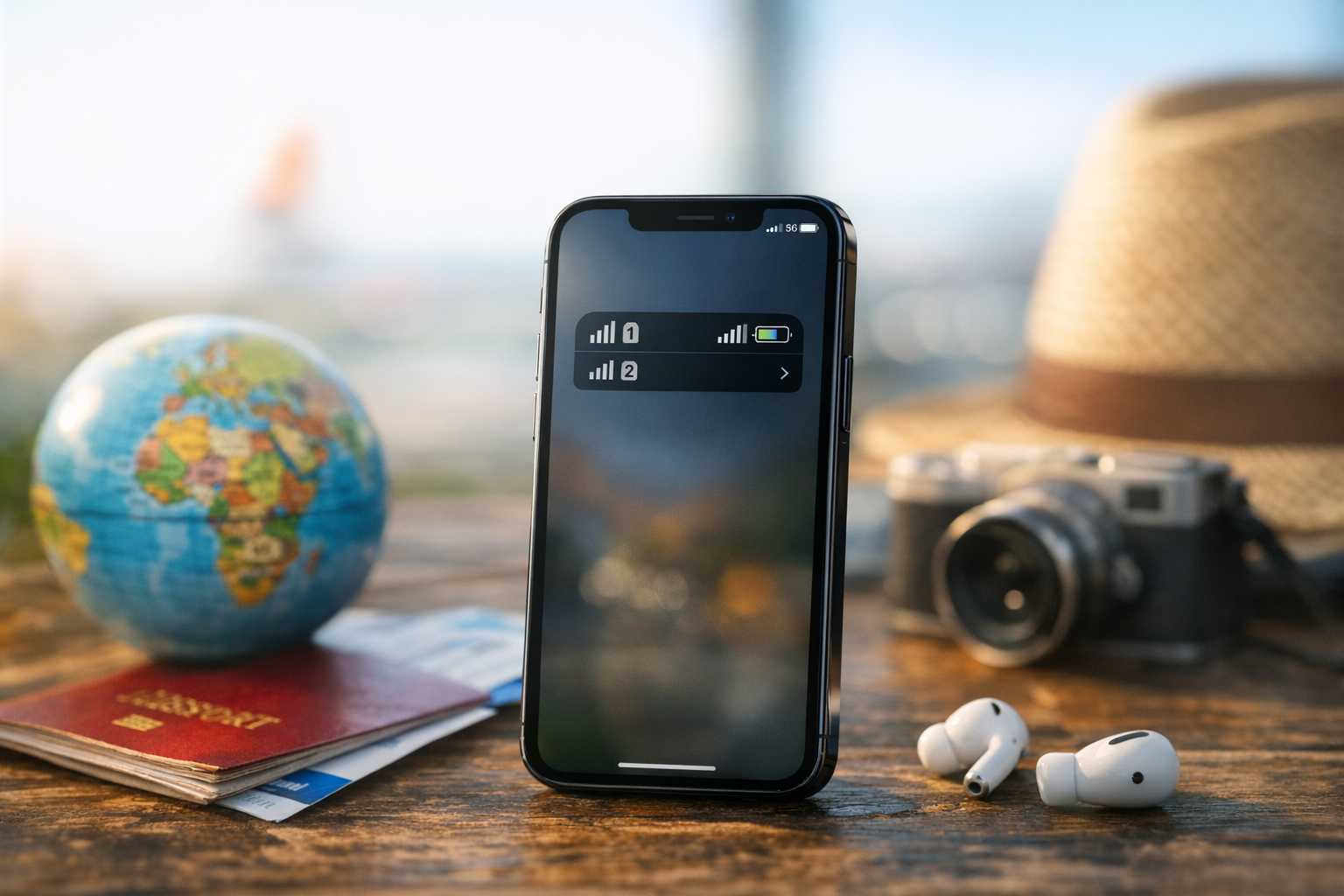
Turn on the eSIM line for mobile data
Enable data roaming for the eSIM
Set your Mexican SIM for calls only if needed
Restart your phone if data does not connect immediately
Most connectivity issues are resolved with a simple restart.
Common mistakes to avoid
Installing while already abroad on weak Wi‑Fi
Turning off the wrong SIM
Forgetting to enable data roaming for the eSIM
Deleting the eSIM before the trip ends
For further insights into how to install and activate your esim, please see our Travel eSIM installation and activation guide
How eSIMs fit into modern European travel
Europe is increasingly app‑driven.
Train tickets are digital
Hotel check‑ins use apps
Museums require timed entry
Restaurants rely on online bookings
Payments are often app‑based
Mobile data is no longer optional. It is part of the travel infrastructure.
An eSIM fits naturally into this environment by providing immediate, predictable access without the friction of physical SIM cards or roaming fees.
Security and privacy considerations
Using public Wi‑Fi across multiple countries increases exposure to unsecured networks. A personal mobile data connection:
Reduces reliance on open networks
Protects banking and payment activity
Improves reliability for sensitive logins
Reduces the risk of data interception
For travellers managing finances, work accounts or personal data, this matters.
Travelling between countries without losing connectivity
One of the most underrated benefits of a Europe eSIM is border transitions. When travelling by train from Spain to France or France to Italy:
Your phone remains connected
Maps continue working
Messaging does not drop
Booking updates arrive in real time
There is no need to stop at stations to change SIMs or search for Wi‑Fi. This continuity makes travel days significantly less stressful.
Final checklist for Mexico to Europe travel connectivity
Before leaving Mexico, make sure you have covered the essentials.
Your phone is eSIM compatible and unlocked
You have chosen the right plan for your itinerary
The eSIM is installed before departure
You understand how to switch data lines if needed
Important documents are saved offline as backup
Once these are in place, connectivity becomes a solved problem.
Why planning connectivity in advance matters
Travelling long‑haul already involves enough uncertainty. Flights, accommodation, transport and schedules all require attention. Mobile data should not be another variable. By choosing the right eSIM before you fly, you:
Save time on arrival
Avoid unexpected costs
Stay connected across borders
Travel with confidence
It is a small decision that improves the entire trip.
Final thought
If your Europe trip from Mexico includes Spain, France and Italy, connectivity should be as seamless as your itinerary. For single‑country trips, local plans work well. For multi‑country journeys, a Europe‑wide eSIM is the simplest, most reliable option.
Related Articles

Best Ramen in Japan: Regional Styles & Must-Visit Shops
Discover the best ramen in Japan, from Hakata tonkotsu to Sapporo miso. Explore regional styles, must‑visit shops and ordering tips for travellers.

Bali for Digital Nomads: Canggu, Ubud & Beyond
Bali for digital nomads explained. Discover Canggu, Ubud and beyond, real costs, WiFi tips, remote work life and how to stay connected in Bali.
How to Set Up an eSIM on iPhone, Step‑by‑Step Guide
Learn how to set up an eSIM on iPhone with our simple step‑by‑step guide. Install, activate and manage eSIMs easily before you travel.