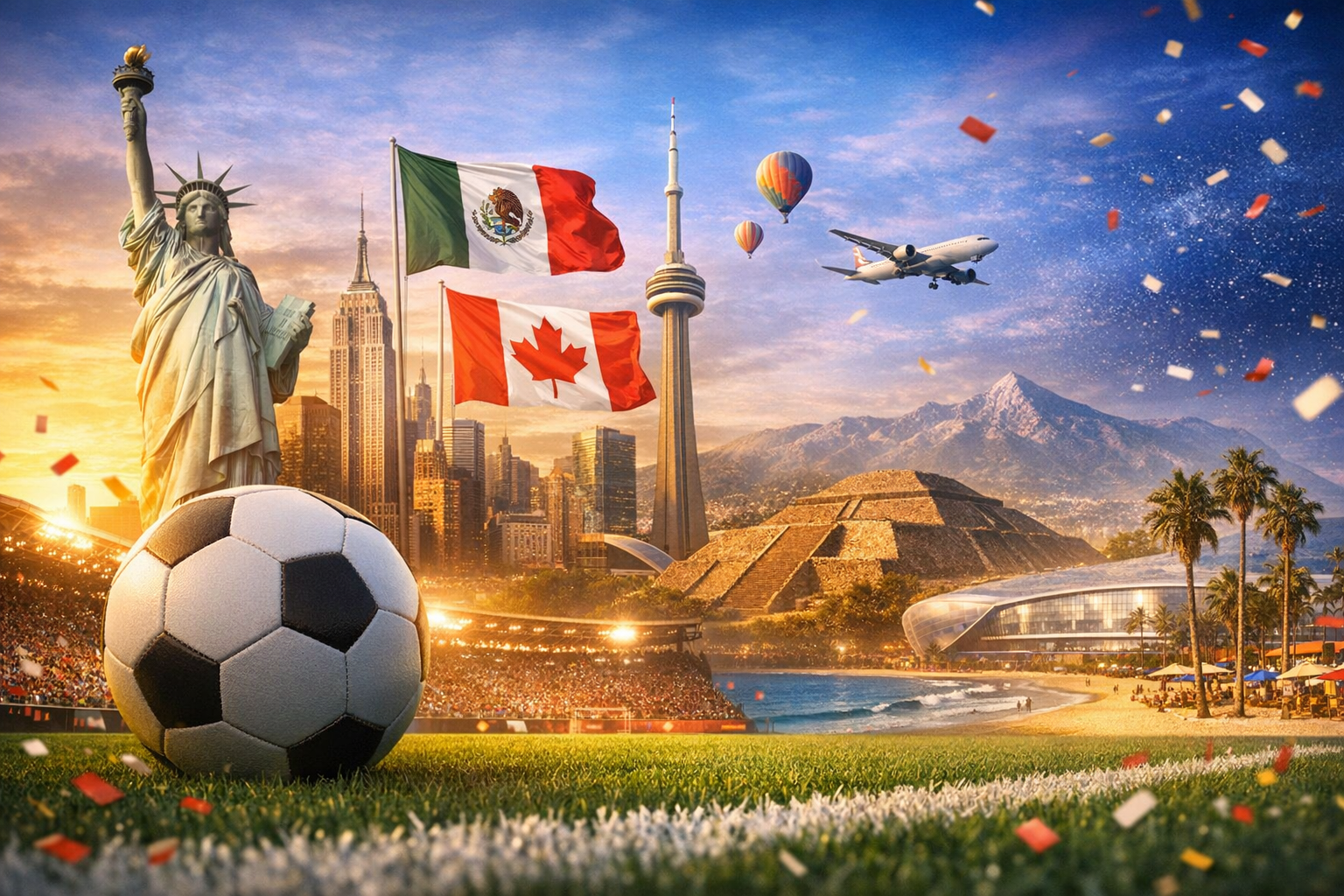
World Cup 2026 Group Stage Guide and Best Cities to Visit
The FIFA World Cup 2026 is not just a tournament. It is a global event reimagined for a new era of football, travel, and fan experience. For the first time, the competition will be hosted across three countries, 16 cities, and feature 48 teams, making it the largest World Cup ever staged.
For travelling fans, the scale of this tournament opens up unprecedented opportunities. You can follow your team across borders, explore diverse cultures, and experience iconic destinations, all while being immersed in the world’s most popular sport.
But this scale also introduces complexity. Matches are spread across time zones, continents, and cities thousands of miles apart. Without proper planning, you risk missing out on moments that could define your entire trip.
That is where this guide comes in.
In this long-form preview, you will learn:
How the new 2026 World Cup group stage works
Which groups and teams are drawing attention
The best host cities to visit during the group stage
Practical travel planning strategies
Why staying connected is essential, and how eSIM makes it effortless
If you are planning a World Cup trip in 2026, this is your essential starting point.
The New World Cup Format Explained
Expansion to 48 teams
The 2026 edition introduces a major change to the tournament structure. Instead of 32 teams, there are now 48 teams divided into 12 groups of four.
Each team plays three matches during the group stage. From there:
The top two teams from each group qualify automatically
The eight best third-placed teams also progress
This creates a 32-team knockout stage for the first time
More matches, more drama
The expansion increases the total number of games from 64 to 104 matches, spread across nearly six weeks.
For fans, this means:
More opportunities to attend matches
Greater unpredictability in group outcomes
Increased travel flexibility
But it also means more decisions to make. Which cities do you visit? Which matches do you prioritise? How do you move efficiently between games?
Why the Group Stage Is the Best Time to Travel
Many fans traditionally focus on knockout rounds. But in 2026, the group stage may be the most rewarding phase to attend.
1. Maximum city coverage
During the group stage, matches are spread across all 16 host cities. Later rounds become concentrated in fewer locations.
If you want to explore multiple destinations, this is the best time.
2. Diverse fan experiences
You will see fans from every continent mixing in fan zones, stadiums, and city centres. The atmosphere is less formal, more spontaneous, and often more enjoyable.
3. Broader ticket access
With more matches taking place, group stage fixtures can be easier to access compared to high-demand knockout games.
Host Countries and What They Offer
The 2026 tournament is unique because it spans three countries, each offering a distinct travel experience.
United States: Scale, Entertainment, and Variety
The US hosts 11 of the 16 cities and the majority of matches, including the final.
From coast to coast, it delivers variety:
Major global cities like New York and Los Angeles
Sports hubs like Dallas and Kansas City
Cultural centres like Boston and Philadelphia
You can move from beaches to skyscrapers to historic districts within a single trip.
Canada: Modern, Scenic, and Accessible
Canada’s two host cities provide a more relaxed alternative.
Toronto offers big city energy with a multicultural twist
Vancouver provides stunning natural scenery and a slower pace
These cities are perfect for fans who want balance between football and exploration.
Mexico: Passion, Culture, and History
Mexico brings football heritage and atmosphere like no other.
Mexico City hosts the opening match at the iconic Estadio Azteca
Guadalajara blends tradition with vibrant culture
Monterrey showcases modern Mexico with a northern edge
Expect packed stadiums, lively streets, and unforgettable food.
Best Cities to Visit During the Group Stage
Now let’s break down the top destinations and what they offer travellers.
New York/New Jersey – The Global Centrepiece
New York is not just a host city. It is the centrepiece of the tournament, hosting the final and several key matches.
What makes it special
Iconic skyline and landmarks
Endless food and entertainment options
A true melting pot of cultures
Walking through Times Square during the World Cup, you will hear dozens of languages and see fans representing every nation.
Travel experience
Excellent transport links
Easy access to nearby cities
Ideal base for East Coast matches
Los Angeles – The Entertainment Capital
Los Angeles combines sport, lifestyle, and entertainment.
Highlights
World-class stadiums
Beaches in Santa Monica and Venice
Hollywood attractions
This is where football meets leisure.
Miami – Football Meets Beach Culture
Miami offers a completely different atmosphere.
What to expect
Tropical climate
Strong Latin American football influence
Nightlife and social energy
It is one of the most vibrant cities for fan culture.
Dallas – The Matchday Hub
Dallas is likely to host more matches than almost any other city.
Why it matters
Central location for travel
Large stadium capacity
Strong sports culture
For fans wanting to attend multiple games, Dallas is a top choice.
Seattle – A Fan-Focused City
Seattle is known for passionate sports fans.
Experience
High-energy stadium atmosphere
Cooler climate
Unique cultural scene
San Francisco Bay Area – Innovation Meets Culture
A host city that blends technology, history, and diversity.
Highlights
Iconic landmarks like the Golden Gate Bridge
Creative food and culture scene
Scenic surroundings
Toronto – Canada’s Urban Heart
Toronto provides a seamless travel experience.
Why visit
Multicultural food scene
Easy navigation
Modern infrastructure
Vancouver – Nature Meets Football
Vancouver offers one of the most scenic host locations.
What to enjoy
Mountains and coastline
Outdoor activities between matches
Relaxed atmosphere
Mexico City – The Soul of the Tournament
Mexico City delivers heritage and passion.
Must-see experiences
Historic Zócalo square
Museums and ancient ruins
Legendary stadium atmosphere
Guadalajara – Tradition and Identity
Guadalajara is often described as Mexico’s cultural heart.
Highlights
Mariachi music
Colonial architecture
Rich culinary traditions
Monterrey – Modern Energy
Monterrey offers a more contemporary city experience.
What stands out
Modern skyline
Strong nightlife
Nearby nature and mountains
Travel Planning: How to Experience More With Less Stress
With such a large tournament footprint, planning is essential.
Build a regional itinerary
Instead of jumping across countries every few days, focus on regions:
West Coast: Los Angeles, Seattle, Vancouver
Central: Dallas, Houston, Monterrey
East Coast: New York, Toronto, Boston
This reduces travel time and cost.
Book early and secure flexibility
Flights, hotels, and match tickets will all be in high demand. Where possible:
Choose flexible accommodation
Keep travel plans adaptable
Monitor match schedules closely
Account for time zones
The tournament spans four time zones, which affects scheduling and travel.
Pack smart for multi-city travel
Travel light
Use digital tickets
Keep essentials accessible
The Importance of Staying Connected
At a World Cup of this scale, your smartphone becomes essential.
You will rely on it to:
Navigate new cities
Check match schedules
Book transport
Communicate with friends
Share your experience
Without reliable data, even basic travel becomes harder.
Why eSIM Is the Smart Choice for World Cup Travel
What is an eSIM?
An eSIM is a digital SIM that allows you to connect to local networks without swapping physical SIM cards.
Key benefits
Instant activation before travel
No need to visit stores abroad
Avoid high roaming charges
Coverage across multiple countries
Ability to keep your home number active
Perfect for a multi-country tournament
Because World Cup 2026 spans multiple countries, traditional SIM cards are limiting.
With an eSIM, you can:
Travel from Mexico to the US without changing SIMs
Stay connected immediately upon arrival
Switch plans digitally if needed
Matchday Experience: What Makes the Group Stage Special
The group stage is when the World Cup truly begins to feel alive.
Unpredictability
With more teams and new qualification rules, every match matters.
Fan energy
Streets filled with national colours
Fan zones with live screenings
Spontaneous celebrations
Cultural exchange
You will meet fans from across the world, sharing experiences beyond football.
Sample 10-Day Group Stage Itinerary
To bring it all together, here is an example trip.
Days 1–3: New York
Arrival and city exploration
Attend group stage match
Visit landmarks
Days 4–6: Toronto
Travel to Canada
Experience fan culture
Enjoy local food scene
Days 7–10: Mexico City
Fly to Mexico
Attend match at Estadio Azteca
Explore historical sites
This route gives you three countries, multiple matches, and a diverse experience.
Practical Travel Tips
Check visa requirements for each country
Use flights wisely to save time
Allow buffer time between matches
Keep digital copies of documents
Stay hydrated, especially in warmer cities
Final Thoughts: A Tournament Like No Other
World Cup 2026 is not just about football. It is an opportunity to explore an entire continent through the lens of sport.
From the skyscrapers of New York to the mountains of Vancouver, from the beaches of Miami to the streets of Mexico City, every destination adds something unique.
The group stage is your chance to experience all of it.
Related Articles
Ultimate World Cup 2026 Travel Guide
Ultimate World Cup 2026 travel guide covering host cities, travel planning and how to stay connected across USA, Canada and Mexico with Travel eSIM and Double Data plans.
Double Data, Double Adventure: Top Summer Destinations to Explore with Vodafone Travel eSIM in 2026
Discover the best summer destinations with Vodafone Travel eSIM and enjoy double data on your trips. Explore top places to visit in 2026 and stay connected everywhere you go.
Summer Travel 2026: Peak Season Connectivity Tips
Stay connected this summer with smart peak‑season travel tips. Learn how to manage data, avoid roaming stress and use eSIMs for summer travel 2026.