Can eSIMs Work on Cruise Ships? A Complete Guide to Staying Connected at Sea
Can eSIMs Work on Cruise Ships?
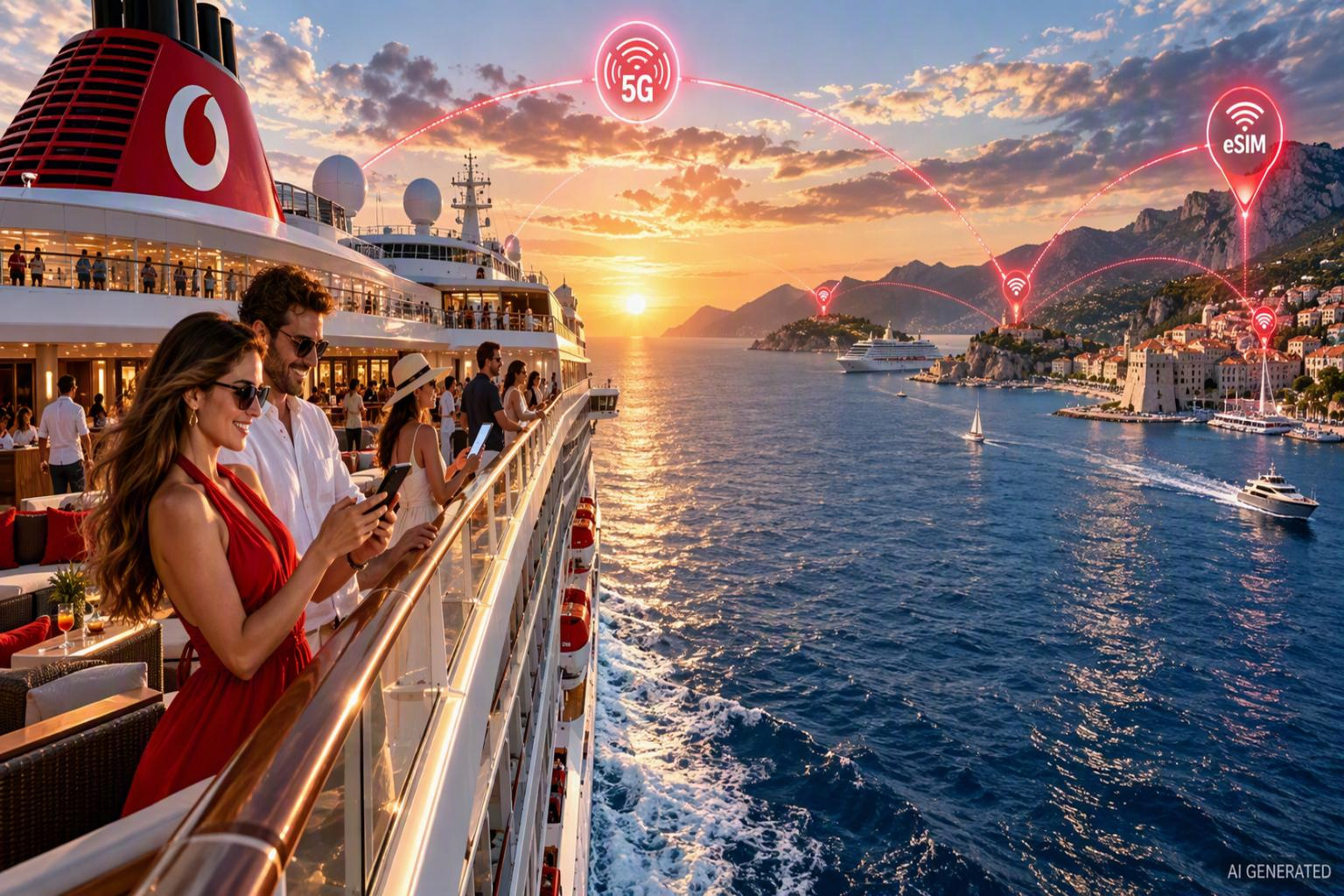
There's nothing quite like waking up to a new destination every morning, sipping coffee while watching the ocean stretch endlessly to the horizon, and enjoying the freedom that comes with a cruise holiday. But alongside the excitement comes a practical question many travellers ask before setting sail: Can eSIMs work on cruise ships? The short answer is yes, but only in certain situations. While a travel eSIM can be one of the easiest and most cost-effective ways to stay connected abroad, cruise ships operate differently from land-based destinations. Understanding when your eSIM will work, when you'll need alternative connectivity options, and how to avoid expensive charges can help you stay connected throughout your voyage without any unpleasant surprises.
Whether you're planning a Mediterranean cruise, Caribbean island-hopping adventure, Alaskan expedition, or a European river cruise, here's everything you need to know about using an eSIM on a cruise ship.
How Do Cruise Ships Connect to the Internet?
Most cruise ships are effectively floating cities. Once they leave port, they're often hundreds of miles away from traditional mobile networks. When you're on land, your phone typically connects to nearby mobile towers. However, once a cruise ship sails far enough from shore, those towers are out of range. This means cruise operators usually rely on satellite internet systems to provide onboard connectivity. These systems transmit data between satellites orbiting the Earth and equipment installed on the ship. As a result, the onboard internet available during your cruise is typically provided through the ship's Wi-Fi network rather than traditional mobile networks.
Can eSIMs Work While a Cruise Ship Is at Sea?
In most cases, travel eSIMs will not provide mobile data while a ship is sailing in open waters. This is because travel eSIMs rely on partnerships with terrestrial mobile operators in different countries. Once your ship moves beyond coastal mobile coverage, there are simply no land-based networks available for your device to connect to.
Even if your phone shows a signal at sea, it may be connecting to maritime networks rather than the destination network covered by your travel eSIM.
For most travellers, this means:
Your travel eSIM will not work in the middle of the ocean
Mobile data coverage becomes unavailable once the ship leaves coastal waters
You'll usually need onboard Wi-Fi if you want internet access during sea days
Your eSIM becomes useful again when approaching ports or coastlines
This differs significantly from using an eSIM during a traditional holiday.
What About Maritime Mobile Networks?
Some cruise ships operate onboard mobile systems known as maritime networks.
These networks can allow passengers to make calls, send texts and sometimes use mobile data while at sea. However, they're very different from the local networks used by travel eSIM providers. Maritime networks are often operated through specialised satellite services and can be considerably more expensive than standard mobile connectivity. Many travellers have accidentally incurred significant charges by allowing their phones to automatically connect to maritime networks. This is one of the biggest reasons cruise passengers should carefully manage their connectivity settings before departure.
When Will Your eSIM Start Working Again?
The good news is that your eSIM becomes incredibly useful whenever your ship approaches land. As the vessel nears a destination, your phone can often reconnect to local mobile networks supported by your travel eSIM plan.
This means you'll usually be able to access mobile data when:
Arriving at a cruise port
Exploring cities during shore excursions
Travelling independently between attractions
Waiting in transport hubs
Returning to the ship near the coast
For travellers visiting multiple destinations during a single voyage, a Europe eSIM for Multi-Country Travel can be particularly useful because it eliminates the need to switch SIMs every time you enter a new country.
Why Cruise Travellers Love eSIMs for Port Days
Shore excursions are often where connectivity matters most.
Many travellers need access to:
Google Maps
Ride-hailing apps
Restaurant reservations
Translation tools
Banking apps
Cruise line notifications
Emergency contacts
Relying solely on cruise ship Wi-Fi doesn't help much once you've stepped off the vessel. An eSIM allows you to connect immediately upon arrival without searching for local SIM cards or public Wi-Fi networks.
Planning a cruise around Europe? Consider activating a travel eSIM before departure so you're connected the moment you step onto the dock.
Cruise Wi-Fi vs eSIM: Which Is Better?
The reality is that most cruise travellers don't choose one or the other. They use both.
Cruise Wi-Fi Advantages
Cruise Wi-Fi is useful because:
It works while the ship is at sea
No mobile signal is required
Available throughout most onboard areas
Often includes messaging packages
However, cruise Wi-Fi can have drawbacks:
Can be expensive
Speeds vary significantly
Streaming may be restricted
Packages often have device limits
eSIM Advantages
Travel eSIMs offer:
Fast local mobile network access in port
Lower costs than many roaming options
Multi-country flexibility
Instant activation
No physical SIM swapping
The key limitation is simple: eSIMs generally depend on land-based mobile networks. This means they excel during port visits rather than during days spent crossing oceans.
How to Avoid Unexpected Charges on a Cruise
Cruise passengers occasionally return home to unexpectedly high phone bills. The good news is that most of these charges are avoidable.
1. Disable Data Roaming on Your Primary SIM
Many travellers keep their normal mobile plan active while using an eSIM for data. Before departure, ensure roaming settings are configured correctly to avoid accidental connections.
2. Use Airplane Mode During Sea Days
Enabling airplane mode prevents accidental connections to maritime networks. You can then manually enable Wi-Fi when using the ship's internet service.
3. Verify eSIM Coverage Before Departure
Not all eSIM plans cover every destination. Check each country included in your cruise itinerary before travelling.
4. Turn Off Automatic Network Selection
Manual network selection can help prevent unintended connections while sailing near international waters.
5. Monitor Background Data Usage
Apps continue using data even when you're not actively browsing. Background downloads, backups and updates can consume more data than expected.
Are Some Cruises Better Suited to eSIMs Than Others?
Absolutely.
Mediterranean Cruises
Mediterranean voyages are often ideal for eSIM users. Ships frequently visit destinations such as Spain, Italy, Greece, Croatia and France, allowing regular opportunities to connect to local networks. Travellers visiting several countries can benefit from a Portugal eSIM guide or broader Europe coverage depending on their route.
Caribbean Cruises
Caribbean cruises often visit multiple islands during a single trip. A regional travel eSIM can provide convenient connectivity in port while avoiding the inconvenience of purchasing multiple local SIM cards.
River Cruises
River cruises generally stay closer to populated areas and mobile coverage. This often means travellers can enjoy more consistent access to mobile networks throughout the journey.
Expedition Cruises
Antarctic, Arctic and remote expedition cruises present the greatest challenge. These voyages frequently travel well beyond terrestrial network coverage, making onboard satellite services the primary connectivity option.
How Much Data Do Cruise Travellers Usually Need?
Your requirements depend on your travel style.
Light Users
Suitable for:
Maps
Messaging apps
Restaurant searches
Email
Typically only a few gigabytes are needed.
Moderate Users
Suitable for:
Social media
Video calls
Frequent web browsing
Photo uploads
Plan for more generous data allowances.
Heavy Users
Suitable for:
Content creators
Remote workers
Frequent streaming
Large file uploads
Combining an eSIM in port with onboard Wi-Fi often provides the most practical solution.
Can You Use an eSIM for Shore Excursions?
Yes, and this is arguably where travel eSIMs deliver their greatest value during a cruise. Imagine arriving in Barcelona, Rome, Athens or Dubrovnik and instantly having access to:
GPS navigation
Restaurant recommendations
Translation apps
Digital tickets
Transport apps
Emergency services
Family communications
Without an eSIM, travellers often find themselves hunting for unreliable public Wi-Fi or paying expensive roaming fees. With an active travel eSIM, you're connected as soon as local network coverage becomes available.
The Best Connectivity Strategy for Cruise Holidays
Rather than viewing cruise Wi-Fi and eSIMs as competing options, think of them as complementary tools.
The most effective strategy is often:
At Sea
Use:
Cruise ship Wi-Fi
Airplane mode enabled
Messaging packages if available
In Port
Use:
Travel eSIM
Local mobile networks
Navigation and travel apps
Data-intensive activities
This combination offers flexibility, convenience and cost control throughout your cruise.
Common Questions About eSIMs on Cruise Ships
Will my eSIM work in the middle of the ocean?
Usually no. Travel eSIMs generally rely on land-based mobile networks that aren't available in open waters.
Can I use WhatsApp with my eSIM on a cruise?
Yes, whenever your phone connects to a supported mobile network in port or when using onboard Wi-Fi.
Is cruise Wi-Fi better than an eSIM?
Neither is universally better. Cruise Wi-Fi works at sea, while eSIMs are ideal during port visits.
Can I use one eSIM across multiple cruise destinations?
Many travel eSIM plans support multiple countries, making them ideal for itineraries that visit several destinations.
Will eSIMs save money on a cruise?
They can significantly reduce costs compared to traditional roaming while visiting ports, although you'll typically still need cruise Wi-Fi for internet access at sea.
Stay Connected From Port to Port
A travel eSIM may not replace onboard internet while you're crossing oceans, but it can dramatically improve connectivity during port visits and shore excursions. For many cruise passengers, the ideal setup is simple: use onboard Wi-Fi during sea days and switch to a travel eSIM whenever you reach your next destination. This combination delivers convenience, flexibility and often substantial cost savings compared with traditional roaming. Before your next cruise, make sure your connectivity is sorted so you can navigate confidently, share memories instantly and stay in touch wherever your itinerary takes you. Explore Vodafone Travel eSIM plans and get connected before you sail.
AI Usage Declaration: This article was created with the assistance of generative artificial intelligence and subsequently reviewed and edited for accuracy, readability, SEO optimisation, brand alignment, and publication readiness.
Read More

Five Destinations That Are Perfect for a Long Weekend
Five long weekend destinations that are easy to explore, with travel tips and seamless eSIM connectivity.
What Can You Do with 5 Mbps While Travelling? Why 5 Mbps Is Better Than 1 Mbps
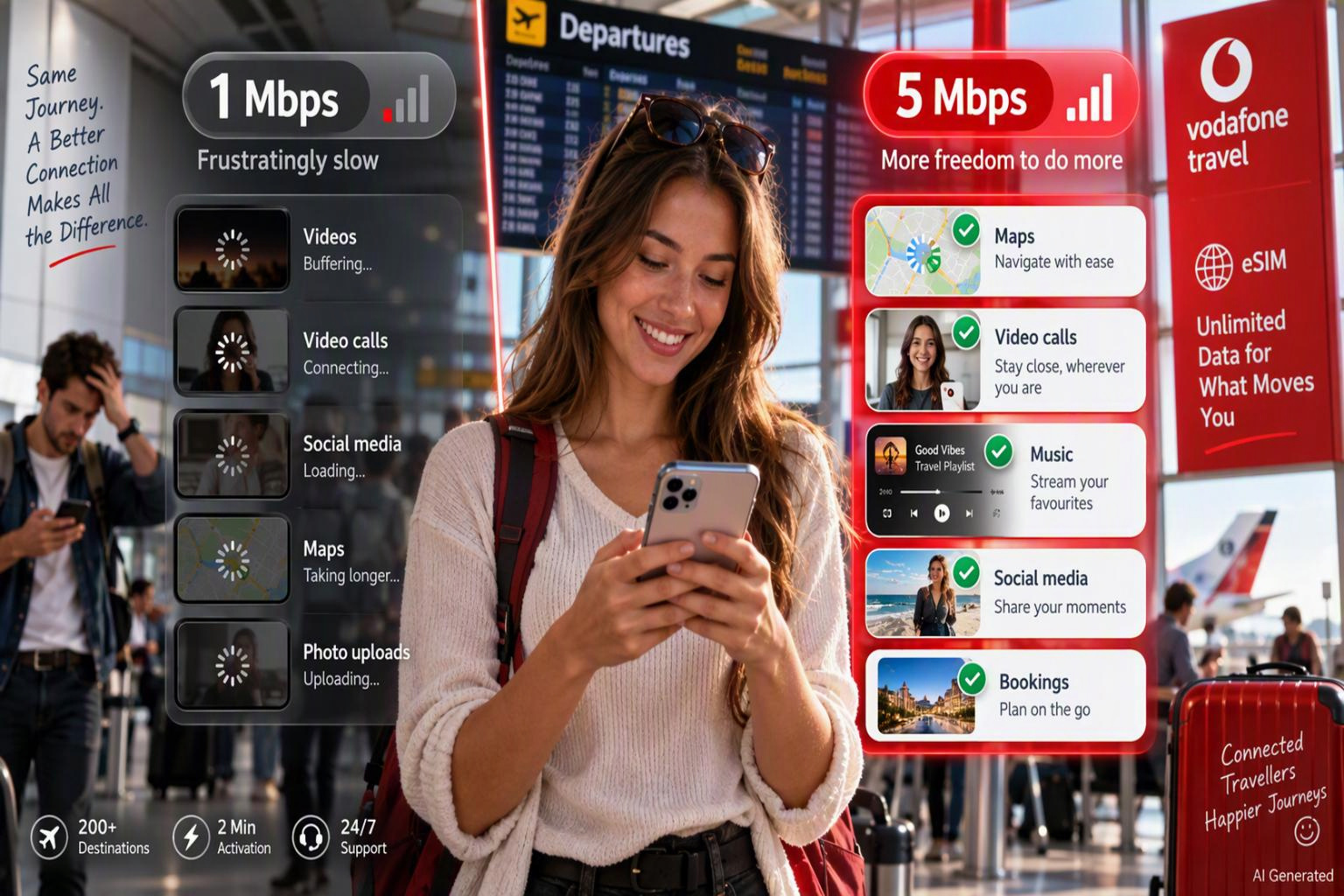
Discover why 5 Mbps gives travellers a smoother experience than 1 Mbps for maps, streaming, calls and more.

First-Time Travel eSIM Customers Get 15% Off with Vodafone Travel
New to Vodafone Travel? Enjoy 15% off your first Travel eSIM order with code NEWTRAVELLERS15. Limited-time offer available from 8-22 October.