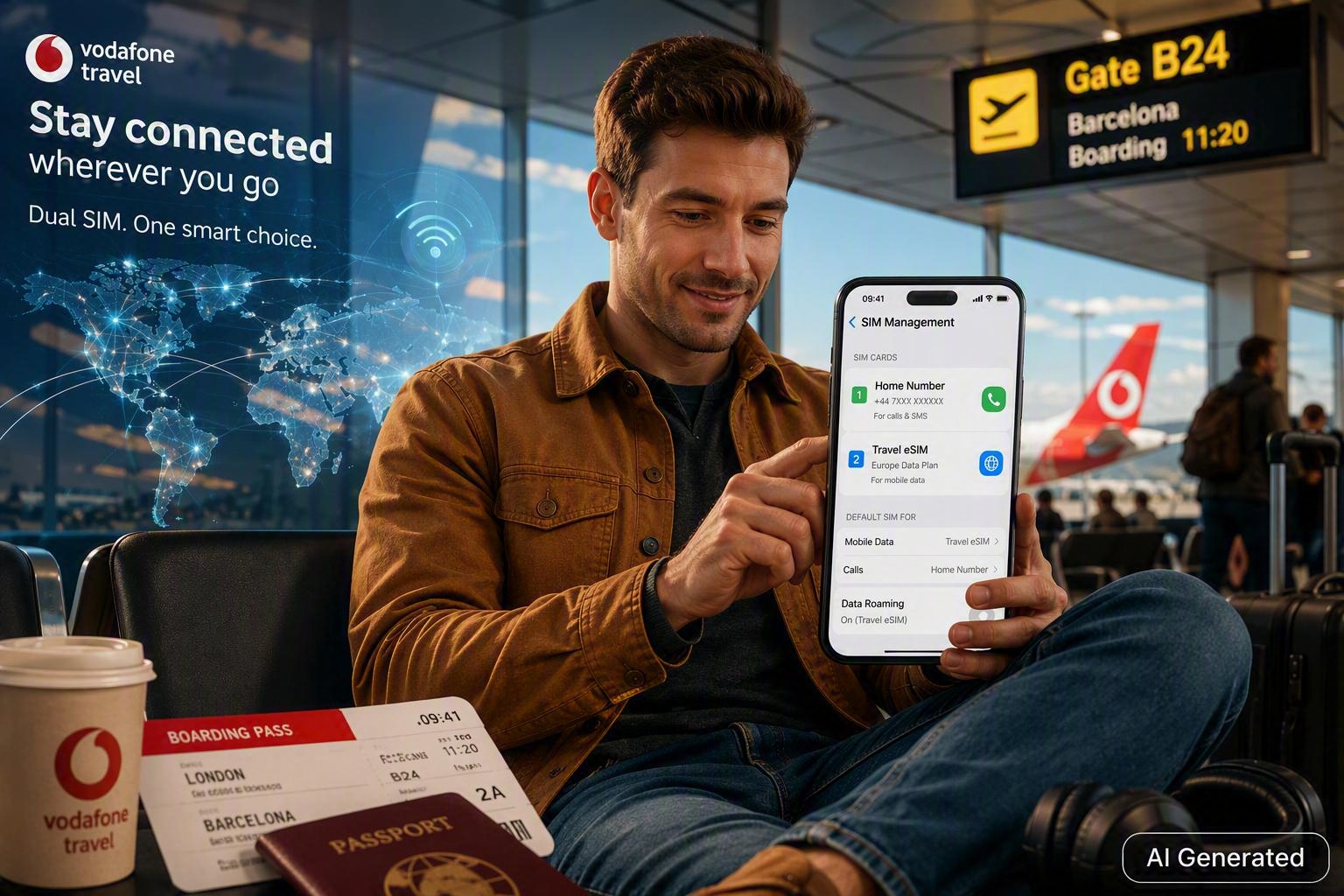
Dual SIM Travel Setup: Keep Your Number for Calls and Use a Travel eSIM for Data
Travelling internationally used to mean making a difficult choice. You either switched to a local SIM card and lost access to your regular number, or you kept roaming active and faced the possibility of expensive charges. Thankfully, modern smartphones have transformed the way we stay connected abroad.
Today, a dual SIM travel setup lets you enjoy the best of both worlds. You can keep your primary number active for important calls, texts and authentication messages while using a travel eSIM exclusively for affordable, high-speed data. It's a simple solution that helps travellers stay connected without sacrificing convenience, security or budget.
For frequent travellers, remote workers, digital nomads and holidaymakers alike, this setup has quickly become one of the smartest ways to use mobile connectivity abroad. With a digital solution like the Vodafone Travel eSIM, you can purchase and activate data before departure, eliminating the need to search for local SIM cards upon arrival.
In this guide, we'll explain exactly how a dual SIM setup works, why it's become so popular among travellers, and how to configure your phone to keep your home number while using a travel eSIM for data.
What Is a Dual SIM Travel Setup?
A dual SIM setup allows your smartphone to use two mobile plans simultaneously.
Traditionally, phones required two physical SIM cards. Modern smartphones, however, often combine a physical SIM with an embedded SIM (eSIM), allowing you to have two active mobile services on the same device.
For travellers, the ideal arrangement usually looks like this:
Your regular SIM remains active
Your home number continues receiving calls and texts
A travel eSIM provides internet access abroad
Mobile data is routed through the travel eSIM
Roaming costs on your primary line are minimised
This means you can continue receiving bank verification codes, WhatsApp registrations, business calls and family communications without removing your existing SIM card.
The setup is particularly useful because many of our digital lives are tied to a single phone number. Switching completely to a local SIM can create complications with two-factor authentication, online banking and messaging apps. A dual SIM arrangement removes those concerns.
Why More Travellers Are Choosing eSIMs
The rise of eSIM technology has dramatically changed international connectivity.
Unlike traditional SIM cards, an eSIM is built directly into your device. There's no plastic card to insert, no waiting for delivery, and no need to visit a mobile store upon arrival.
Solutions such as the Vodafone Travel eSIM data plans allow travellers to purchase connectivity before departure and activate service in just a few minutes.The benefits are significant:
Instant Connectivity
Nobody wants to land after a long flight and spend time looking for airport SIM kiosks.
With an eSIM installed before you travel, your data connection can activate shortly after arrival.
Keep Your Existing Number
One of the biggest advantages of a dual SIM setup is that your personal or business number remains active. Friends, family and colleagues continue using the same contact details they always have.
No Physical SIM Swaps
Physical SIM cards are small and easy to lose. Travellers frequently misplace their home SIM cards when switching to a local option. eSIM technology eliminates that risk entirely.
Greater Flexibility
eSIMs let you store multiple plans on one device.
Many smartphones allow users to switch between plans with a few taps, making travel connectivity considerably easier than before.
How Dual SIM Technology Actually Works
While the concept sounds technical, the process is surprisingly straightforward.Most modern devices let you assign different functions to each SIM profile.
For example:
Function | SIM Used |
Calls | Home SIM |
Text Messages | Home SIM |
Data | Travel eSIM |
Mobile Banking Verifications | Home SIM |
Google Maps | Travel eSIM |
Social Media | Travel eSIM |
Because mobile data is being handled by the travel eSIM, you gain access to affordable local or regional connectivity while maintaining access to your primary number.
When configured correctly, many users report forgetting entirely that they're using two separate mobile services.
The Biggest Benefits of Keeping Your Original Number Active
Receive Important Authentication Codes
Many online services rely on SMS verification.
Banks, government accounts, payment platforms and email providers frequently send one-time passcodes to your registered number. If you replace your home SIM completely, accessing these messages may become difficult. A dual SIM setup keeps those verification methods available throughout your trip.
Stay Reachable for Work
Business travellers often need to remain available on their usual number. Colleagues and clients generally do not want to learn a temporary number each time you travel. Keeping your main line active ensures professional continuity.
Avoid Missing Family Communications
Whether it's a school update, family emergency or important appointment reminder, receiving messages on your regular number offers peace of mind.
Simplify Travel Logistics
Hotels, airlines and ride-sharing apps often use your registered mobile number for notifications. Maintaining access to that number makes travel management much easier.
Why Use a Travel eSIM for Data Instead of Roaming?
Traditional roaming has improved over the years, but it is not always the most cost-effective solution. Travel eSIMs are specifically designed for international use. Many travellers find they can obtain larger data allowances and better visibility over costs through dedicated travel data plans. The Vodafone Travel eSIM activation process is designed to be completed before departure, helping travellers avoid the uncertainty that often comes with arriving in a new country.
Better Cost Control
Budgeting becomes easier because you purchase a set amount of data in advance. There are no surprise bills when you return home.
Regional Coverage
Many travel eSIM plans cover multiple countries under a single package. This is especially useful if you're visiting several destinations during one trip.
Fast Setup
Activation commonly takes only a few minutes. Most users simply scan a QR code and follow on-screen instructions.
Convenient Top-Ups
Should you use your allowance faster than expected, topping up is generally much easier than searching for a local provider in an unfamiliar destination.
Which Phones Support Dual SIM and eSIM?
The good news is that many modern smartphones support this functionality. Popular supported devices often include:
Apple iPhone
iPhone XS and newer
iPhone XR and newer
iPhone SE (2nd generation and later)
Samsung Galaxy
Galaxy S series (recent generations)
Galaxy Z Fold range
Galaxy Z Flip range
Selected Galaxy A devices
Google Pixel
Pixel 3 and newer
Most recent Pixel flagship devices
Other Brands
Many devices from Huawei, Oppo, Motorola, Xiaomi and other manufacturers also support eSIM technology.
Before travelling, it's always worth checking device compatibility.
How to Set Up a Dual SIM Travel Configuration
The process is simpler than many travellers expect.
Step 1: Keep Your Existing SIM Installed
Do not remove your current SIM card. Leave it in place so your number remains active.
Step 2: Purchase a Travel eSIM
Choose a travel eSIM that matches your destination and expected usage.
Many travellers select destination-specific or regional plans depending on their itinerary.You can browse available destinations through Vodafone's travel eSIM platform and purchase before departure.
Step 3: Install the eSIM
Install the eSIM profile by scanning the QR code supplied after purchase.
Many providers, including Vodafone Travel, supply detailed installation instructions.
Step 4: Configure Mobile Data
Set your travel eSIM as the preferred line for:
Mobile data
Internet services
Browsing
Navigation
Streaming
Step 5: Keep Calls and Texts on Your Home SIM
Leave your original SIM selected for:
Voice calls
SMS
Authentication messages
This is the key step that creates the dual SIM travel setup.
Step 6: Disable Data Roaming on Your Primary SIM
This helps prevent accidental roaming charges.
Always make sure your travel eSIM is the only line handling data usage.
Common Mistakes to Avoid
Forgetting to Disable Data Roaming
One of the most common mistakes is leaving roaming enabled on the primary SIM.
This can result in unexpected charges if the phone occasionally switches to that connection.
Installing the eSIM at the Last Minute
Install your eSIM before departure whenever possible.
This gives you time to troubleshoot any issues while still at home.
Not Checking Compatibility
eSIM support varies by device and region.
Always verify compatibility before purchasing a plan.
Ignoring Network Settings
Every device handles dual SIM management slightly differently.
Spend a few minutes reviewing settings before your flight.
Who Benefits Most From This Setup?
Business Travellers
Professionals who rely on their regular number benefit greatly from keeping business communications uninterrupted.
Frequent Flyers
A dual SIM setup eliminates the need to repeatedly swap SIM cards throughout the year.
Digital Nomads
People working remotely while travelling often need dependable access to both local data and their established phone number.
Families
Parents can stay connected with schools, childcare providers and relatives while keeping data costs under control.
Multi-Country Travellers
Regional eSIM plans are particularly useful for itineraries involving several countries. Travellers can move between destinations without repeatedly purchasing new SIM cards.
Is Dual SIM Travel Secure?
Generally, yes.
In fact, maintaining access to your regular number can improve security. Many important online accounts rely on SMS-based authentication.
Keeping your home number active reduces the risk of becoming locked out while travelling. It also means account recovery processes remain familiar and accessible if something goes wrong.
As always, travellers should:
Use strong passwords
Enable multi-factor authentication
Avoid unsecured public Wi-Fi
Keep device software up to date
Travel Together: A Smart Option for Groups
If you're travelling with family or friends, managing connectivity for multiple people can quickly become complicated. Vodafone's Travel Together plans are designed to simplify group connectivity by allowing multiple travellers to share a data allowance across several devices.
This can be especially useful for family holidays, group tours and business travel teams who want a straightforward way to stay connected abroad without managing separate plans for everyone.
The Future of Travel Connectivity
The travel experience is becoming increasingly digital. From airline check-ins and ride-hailing apps to mobile payments and live navigation, reliable connectivity is no longer a luxury. It's an essential part of modern travel. eSIM technology is helping travellers move away from outdated practices such as hunting for physical SIM cards, carrying multiple phones or risking expensive roaming charges. As device support continues to expand, dual SIM travel setups are likely to become the standard way people stay connected internationally.
For most travellers, the combination is ideal:
Keep your trusted phone number
Receive calls and verification texts
Enjoy affordable data abroad
Avoid the hassle of physical SIM swaps
Stay connected from the moment you land
Get Connected Before You Fly
A dual SIM travel setup is one of the easiest ways to simplify international travel. By keeping your regular number active for calls and messages while using a travel eSIM for data, you get convenience, flexibility and peace of mind in a single solution. Whether you're planning a weekend city break, a multi-country adventure or a long-term work trip abroad, setting up your connectivity before departure can make all the difference.
Explore the latest Vodafone Travel eSIM plans and arrive connected, confident and ready to make the most of your journey.
Read More
One eSIM for Europe: Can You Use a Single eSIM Across Multiple Countries?
Wondering if you need a separate SIM for every European destination?

Best Weekend Getaways in Europe This September: 11 Incredible Escapes for Late Summer Travel
Discover the best European weekend getaways this September, from coastal retreats to city breaks.

Munich During Oktoberfest: A First-Time Visitor's Guide
First time at Oktoberfest? Discover Munich tips, beer tents, costs, travel advice and how to stay connected.